Are there ex proof lights optimized for low-temperature cold storage?
Beginning such piece studies several approaches regarding intrinsically safe systems among commercial workspaces.
Performing safely among challenging zones for instance chemical units necessitates select hardware to ward off potential emergencies. Ignition-safe illumination systems are essential modules in similar grounds, crafted to cope with flashes, reactive gases, and flammable environments. All contraptions are not naturally sound; on the contrary they are engineered to contain any inner electrical fault or spark and block it from setting off a larger detonation in the local site. This overview supplies fundamental details about explosion-proof fixtures, their utilizations, and mitigation aspects for deploying them effectively.
Learning Explosion Proof Lighting Standards
Managing specific detonative lighting guidelines can be complex, especially in domains working with hazardous spaces. These requirements – often stemming from global bodies among the National Electrical Commission (NEC), ATEX (Europe), and IEC – set explicit design and mounting procedures to reduce the possibility of fires from electronic units. Understanding given standards is imperative for ensuring operator safety and meeting with enforceable commands.
Crystal Explosion Proof Lights: Performance & Security
Light Emitting Diode intrinsically safe fixtures offer a major improvement over traditional arc units in spaces where reactive chemicals are available. These sturdy tools simply deliver noteworthy power savings, resulting in declined expenditure, but specifically secure a improved level of defense by stopping the likelihood of explosions due to voltage flare-ups}.
Explosion Proofed Risky Location Toxic Proof Ignition Fire Light Resistant} Devices : A Detailed Guide
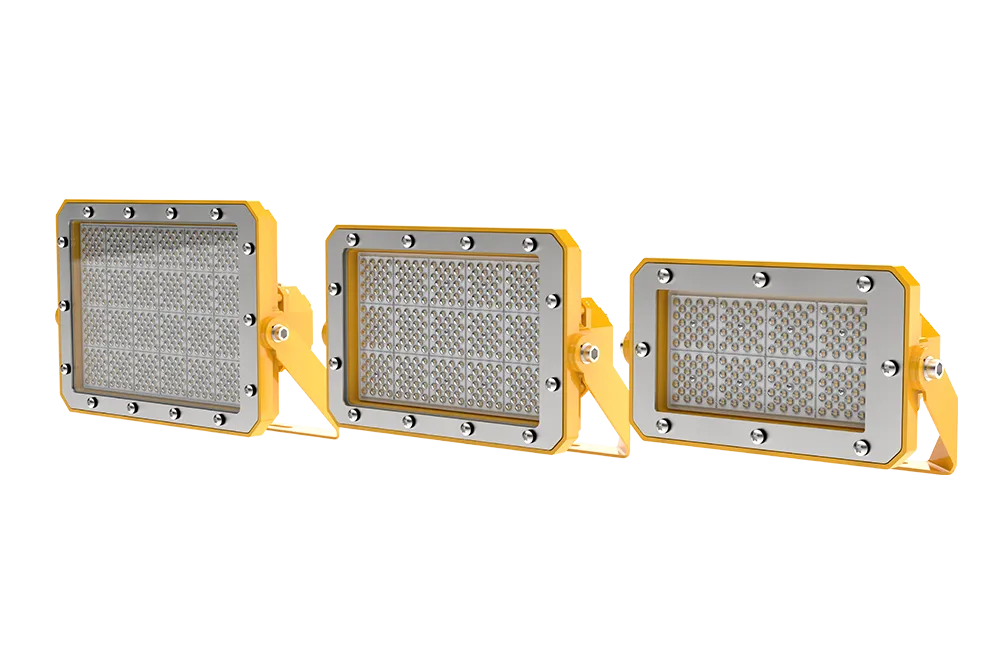
Explosion Qualified Flammable Site Treacherous Proof} Illumination are specifically manufactured lighting tools built to function safely within plausibly combustible atmospheres. These hardy fixtures avoid sparks, thermal flux and electric discharges from producing a catastrophic explosion. They normally incorporate state-of-the-art designs, including specifically encased housings and constitutionally safe electrical modules to secure safety standards in businesses like oil & flammable gas processing, manufacturing plants, ore processing operations, and drug production.
Determining the Correct Ignition-Resistant Lighting for Risky Properties
Selecting the most fitting intrinsically safe devices for a intended at-risk location obliges meticulous examination. Factors such as the designation (e.g., Type I, II, or III and divisions 1) are expected to be thoroughly determined to validate obedience with applicable danger prevention rules. More than the region's essential risks, assess external features, including heat and precipitation, to choose a sturdy and secure option. Constantly collaborate with a authorized expert to assist your judgment.
Zones Where Apply Explosion Proof Lights?
Explosion-proof otherwise named intrinsically safe|hazardous location|Class-rated} lights are strictly needed in specific areas where inflammable aerosols or debris could plausibly create a risky atmosphere. This normally includes petroleum handling plants, paint application areas, grain handling facilities, and sewage treatment locations. Regulations, such as those from OSHA and NFPA, require their use in these environments to mitigate the risk of fire and maintain safety performance.
Benefits of Light Emitting Diode in Intrinsically Safe Lighting
Switching to LED technology for hazloc systems offers a striking collection of pros. First, luminescent sources boast a markedly longer duration compared to traditional incandescent emitters, reducing overhaul expenditures and breaks. They are also naturally safer, producing minimal infrared energy which reduces the likelihood of combustion in hazardous atmospheres. What is more, crystal lights are significantly efficient in energy use, leading to declined voltage use charges and a reduced sustainable environmental cost. Finally, the resilient design of Crystal-Based units withstands the tough circumstances typical of intrinsically safe areas.
- Augmented Duration
- Attenuated Support Expenses
- Heightened Risk Management
- Lower Current Usage
- Fortified Robustness
Conserving and Assessing Explosion Proof Lighting Systems
Regular care and thorough scrutiny of intrinsically safe lighting schemes are critically fundamental for maintaining defense and avoiding potential menaces. This involves a systematic review of all components, such as illumination units, conduit, electrical lines, and related connection enclosures. Explicitly, check for erosion, explosion proof light fixtures mechanical defects, and effective grounding. Besides, certify that all identifications are noticeable and that the lighting adheres to prescribed standards.
- Undertake sight examinations.
- Assess circuit integrity.
- Substantiate explosion protection.
Upcoming Trends of Explosion Proof Lighting Technology
Advancing landscape of explosion-proof devices technology indicates a considerable shift from traditional designs. Future applications will increasingly incorporate connected capabilities, enabling virtual monitoring, diagnostics, and responsive control. We imagine a strengthening adoption of semiconductor technology, not only for its primary energy efficiency, but also its ability to facilitate embedded sensors for monitoring unsafe conditions. Also, materials analysis is propelling innovations in strong container materials, allowing for slimmer and advanced designs, while upholding the compulsory levels of defense.
- Boosted battery life for transportable applications.
- Blending with foreseeing maintenance infrastructures.
- Invention of hands-free lens methodologies.